Product Design
iPad App
Client
industry
Service
About project

{/}
Problems
Clinical documentation was slow and disconnected from the examination flow
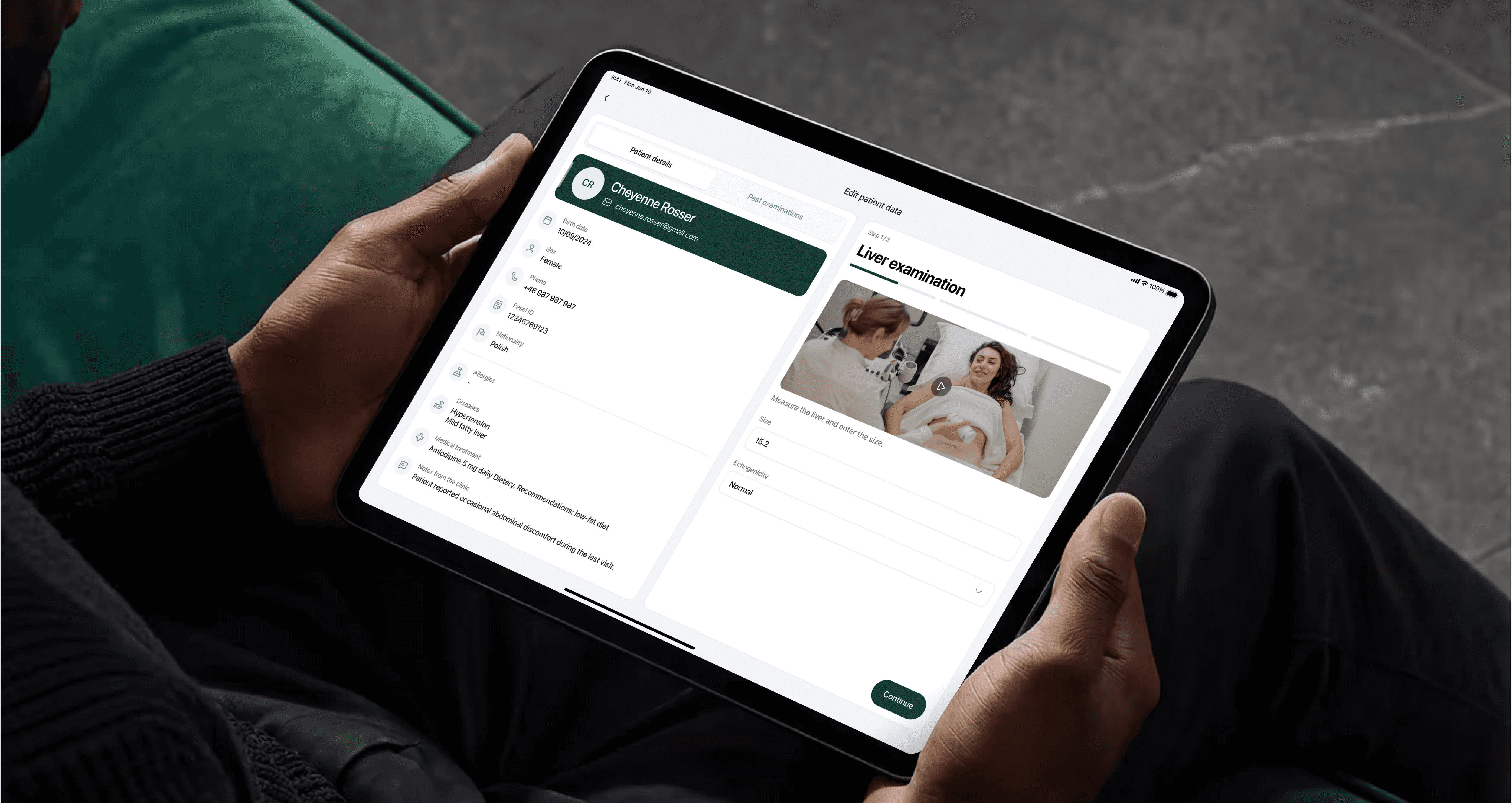
Doctors had to enter ultrasound parameters manually in the existing CRM, often during or after patient visits. The workflow was not optimized for fast USG input, which created extra context switching, increased cognitive load, and made documentation feel disruptive rather than supportive during examinations.
Solutions
Guided documentation flow
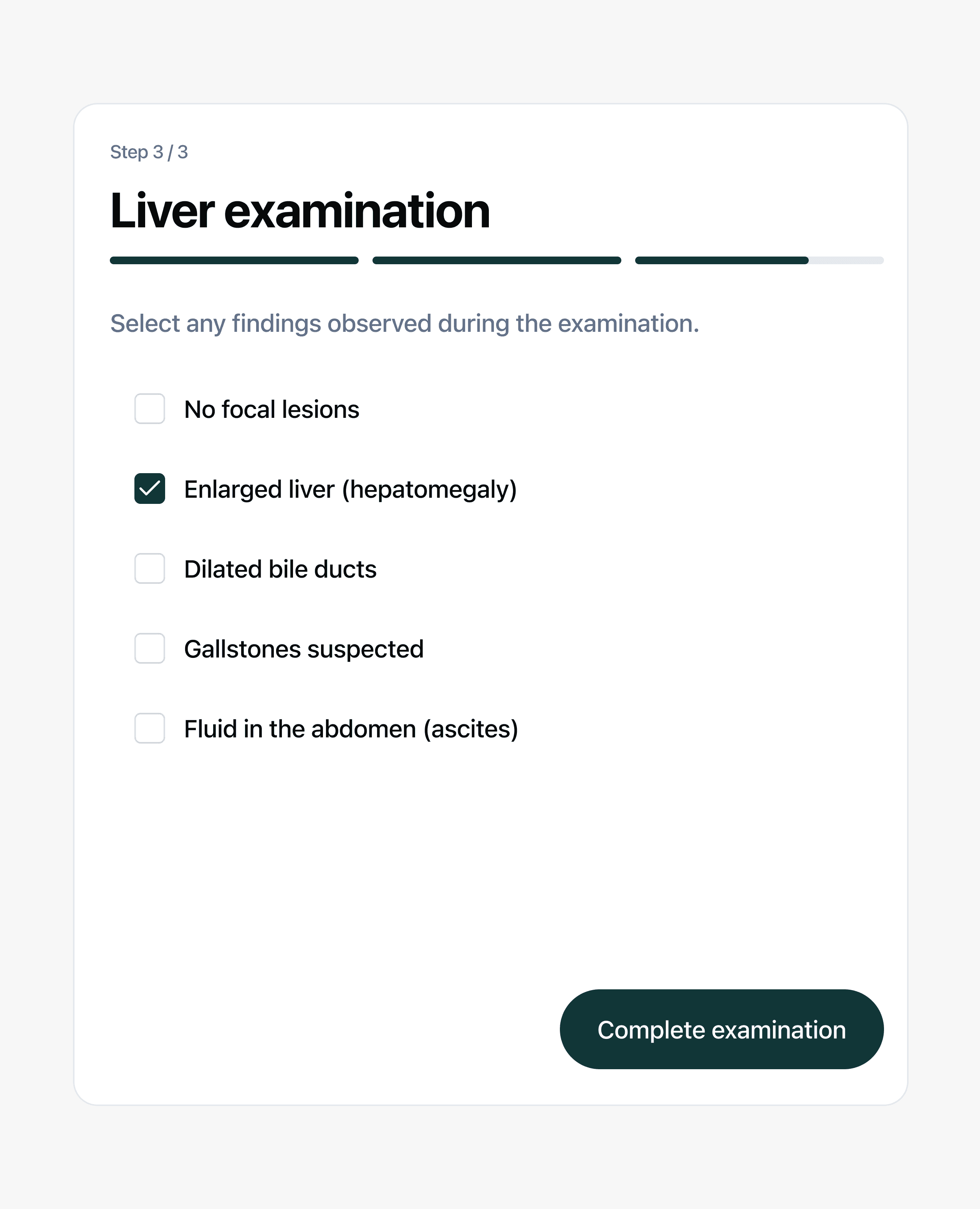
Designed a focused USG input experience aligned with real clinical workflows. The solution introduced a structured, guided interface for capturing ultrasound data faster and more consistently, reducing manual effort while helping doctors stay focused on the patient.
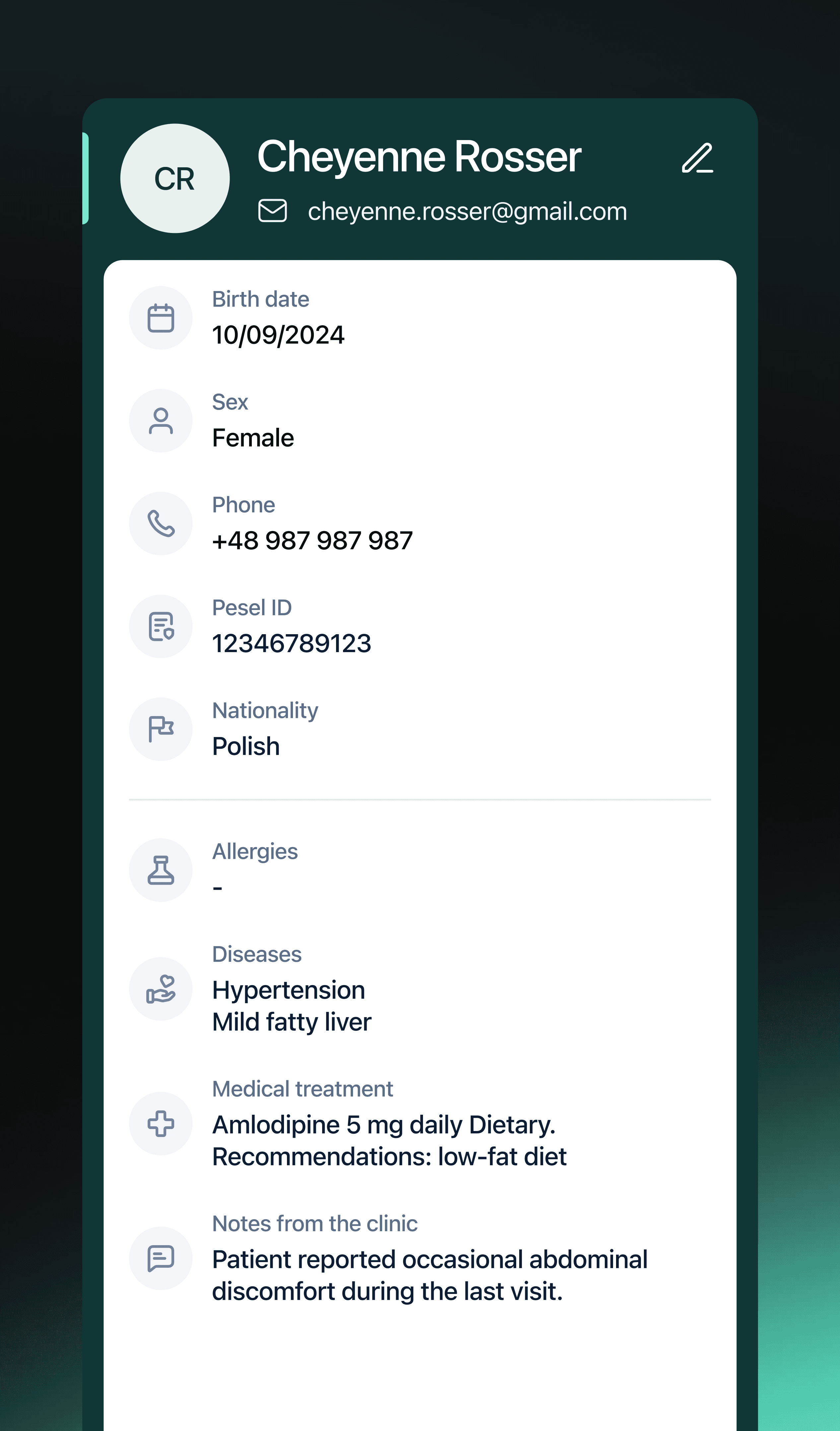

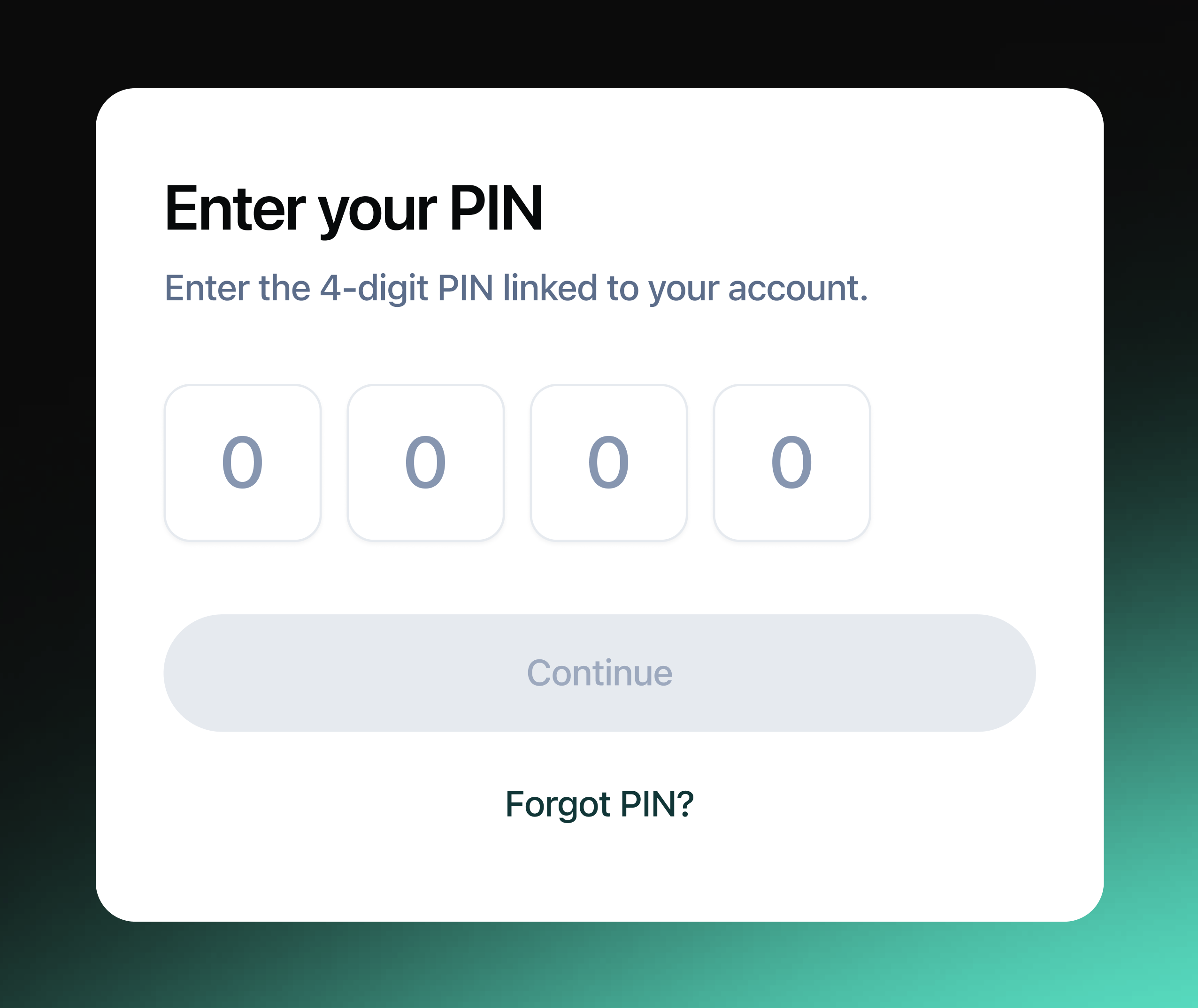
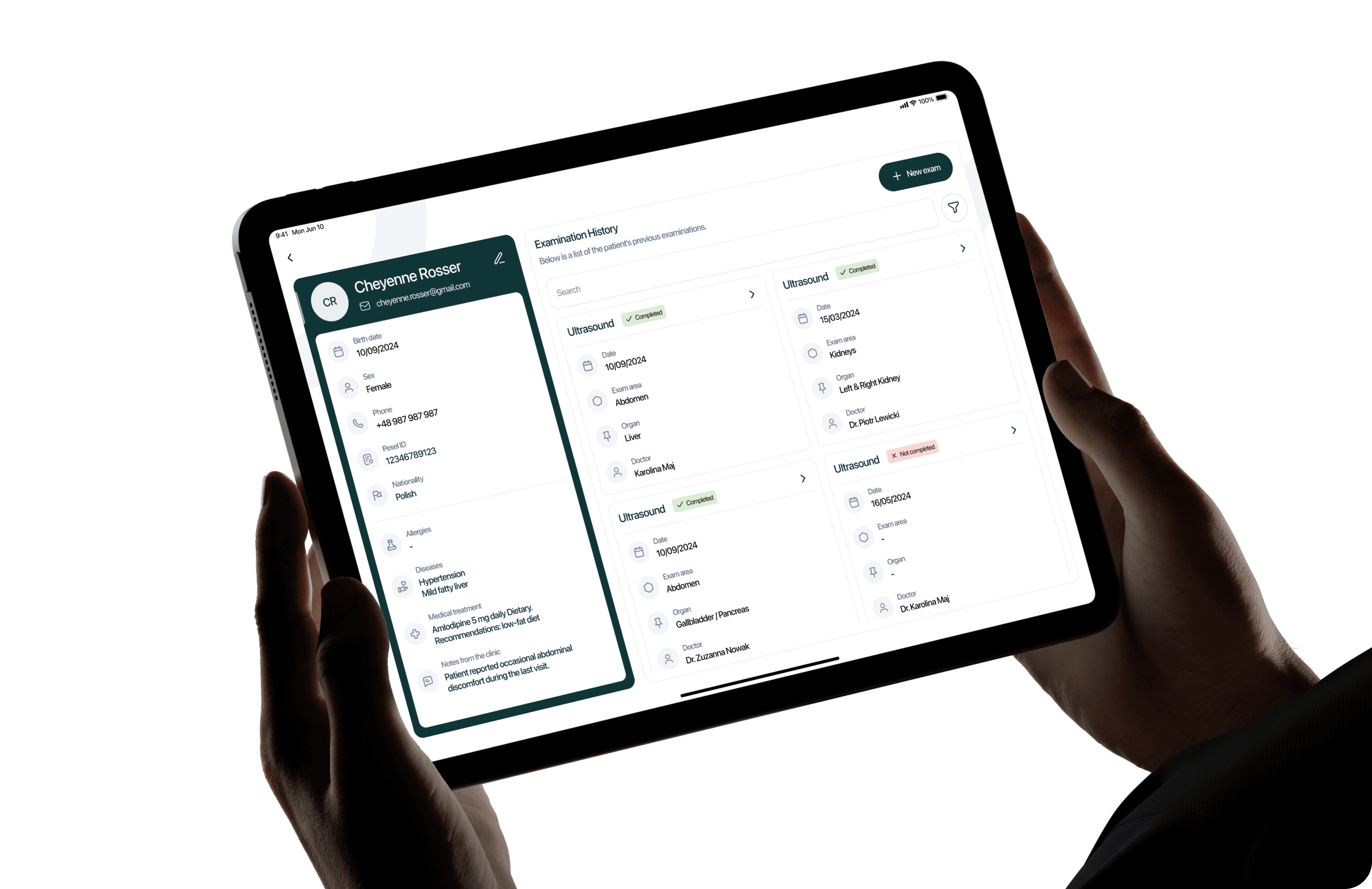
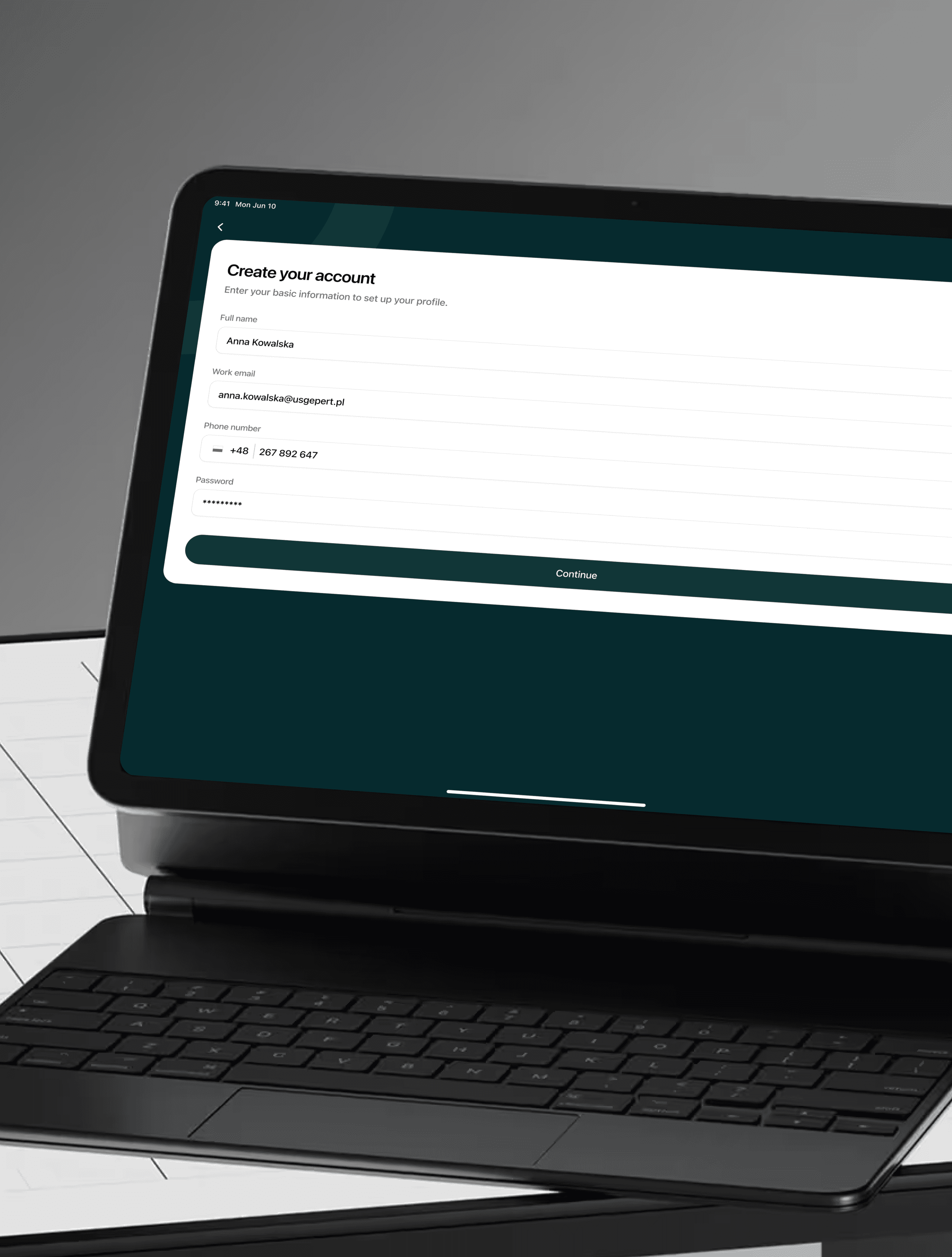
The product is a licensed B2B clinic application, available only to doctors and clinics with purchased access. Doctors were already using a CRM, but entering ultrasound (USG) parameters was slow, disruptive, and not designed for real clinical workflows.
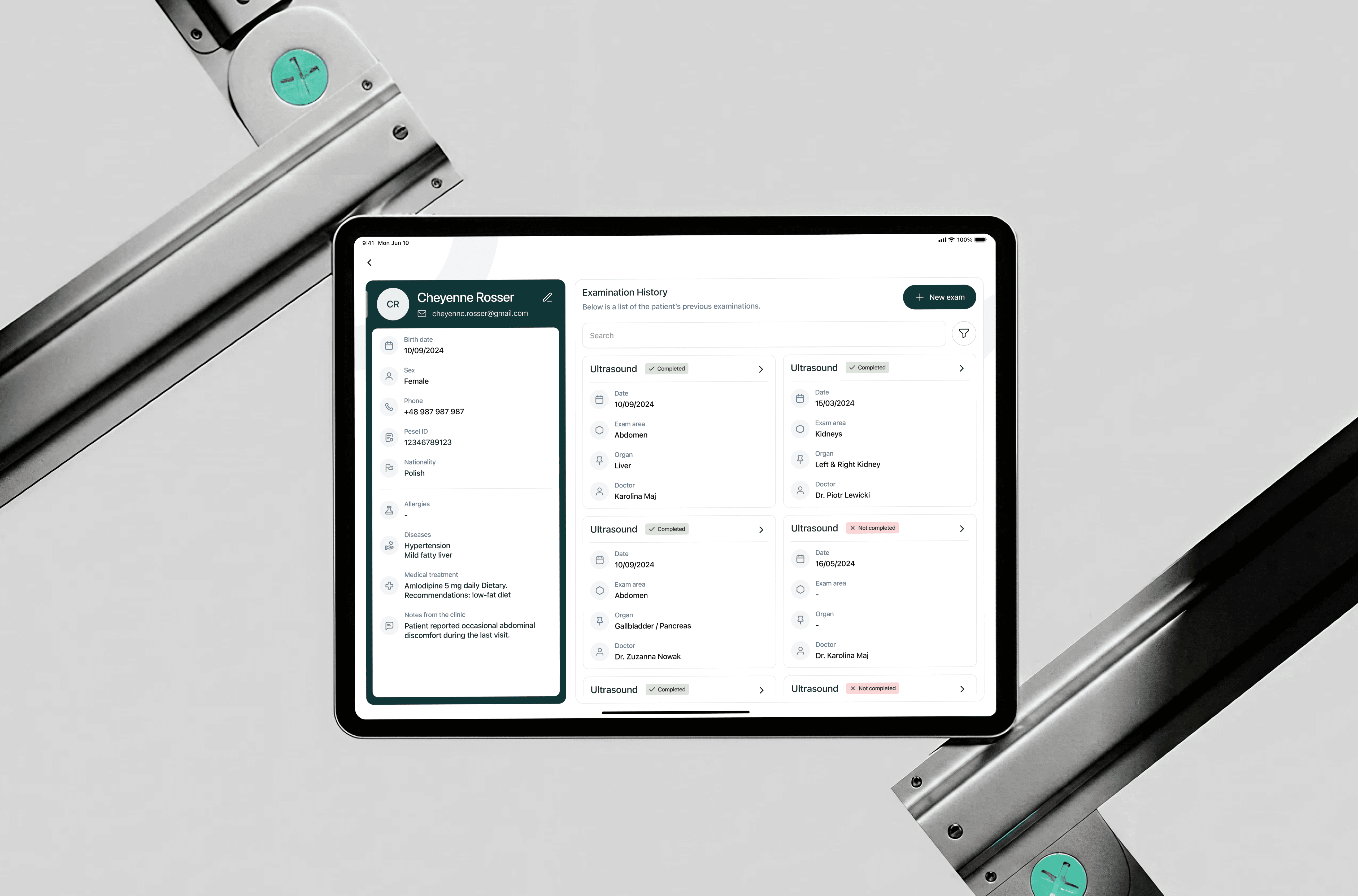
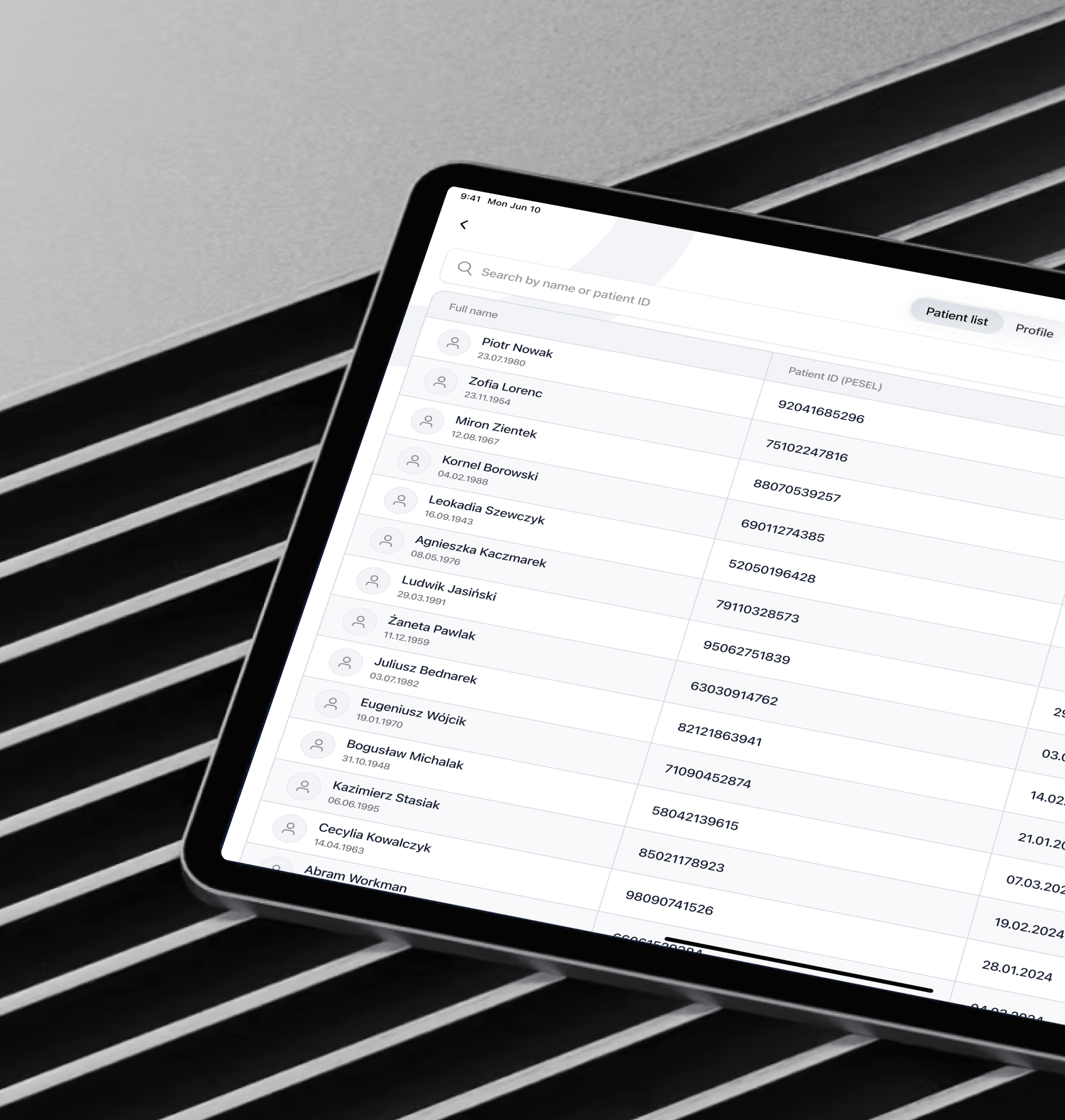
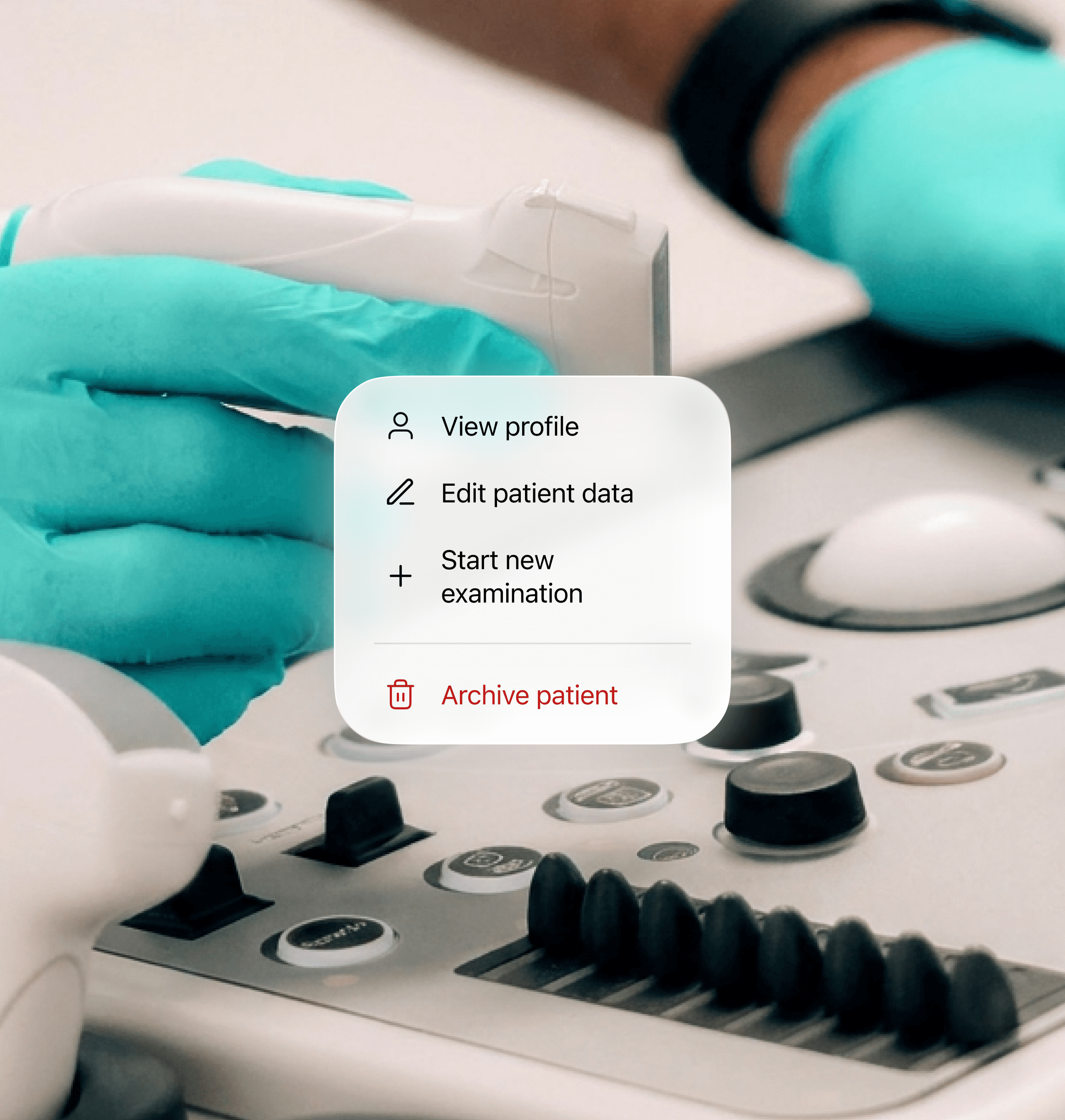
The flow was structured around the doctor’s main clinical task: quickly accessing the right patient and starting a new examination.
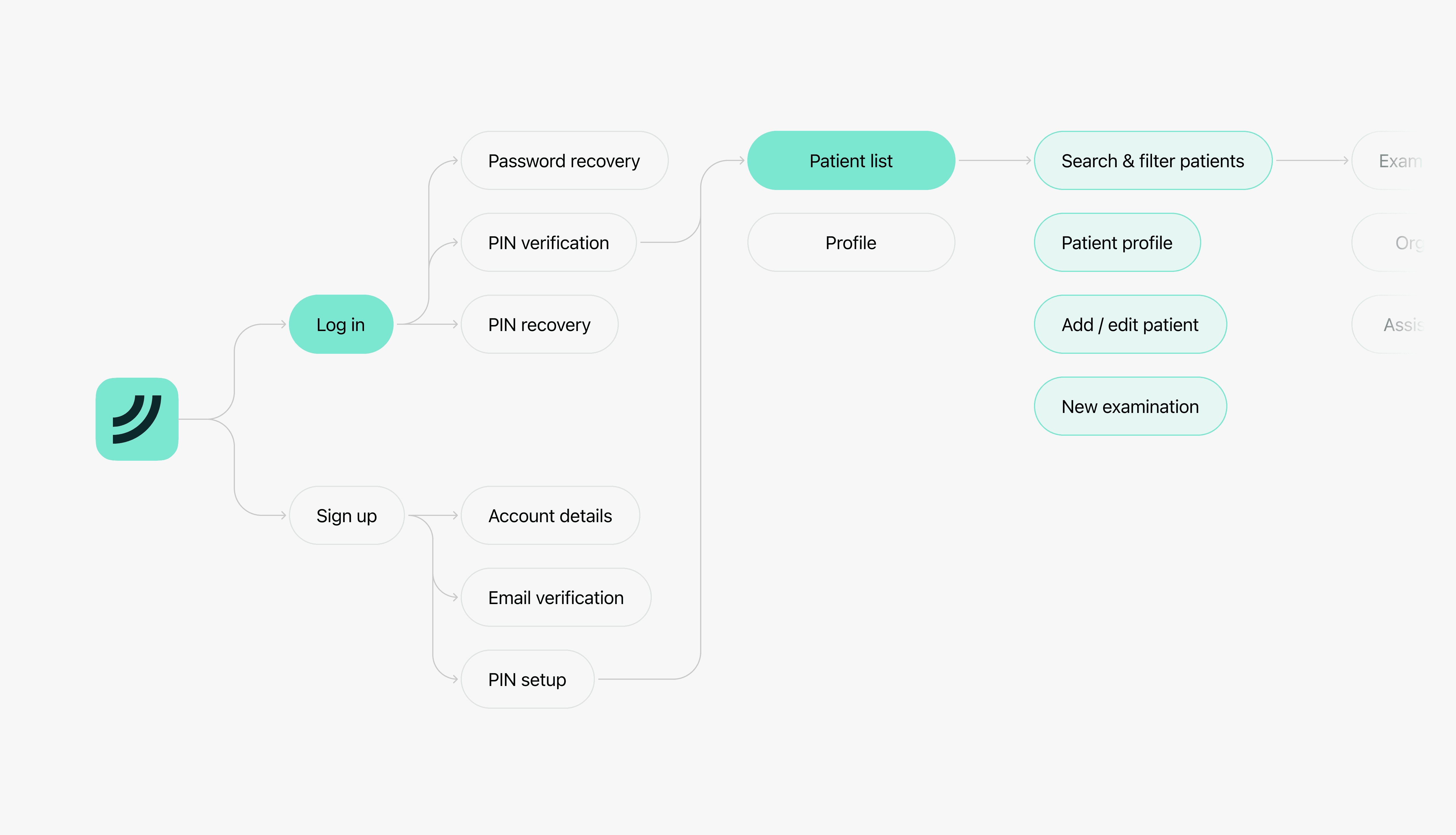
The interface reused familiar CRM patterns while restructuring the USG documentation flow to make data entry faster, clearer, and less disruptive during examinations.
{/}
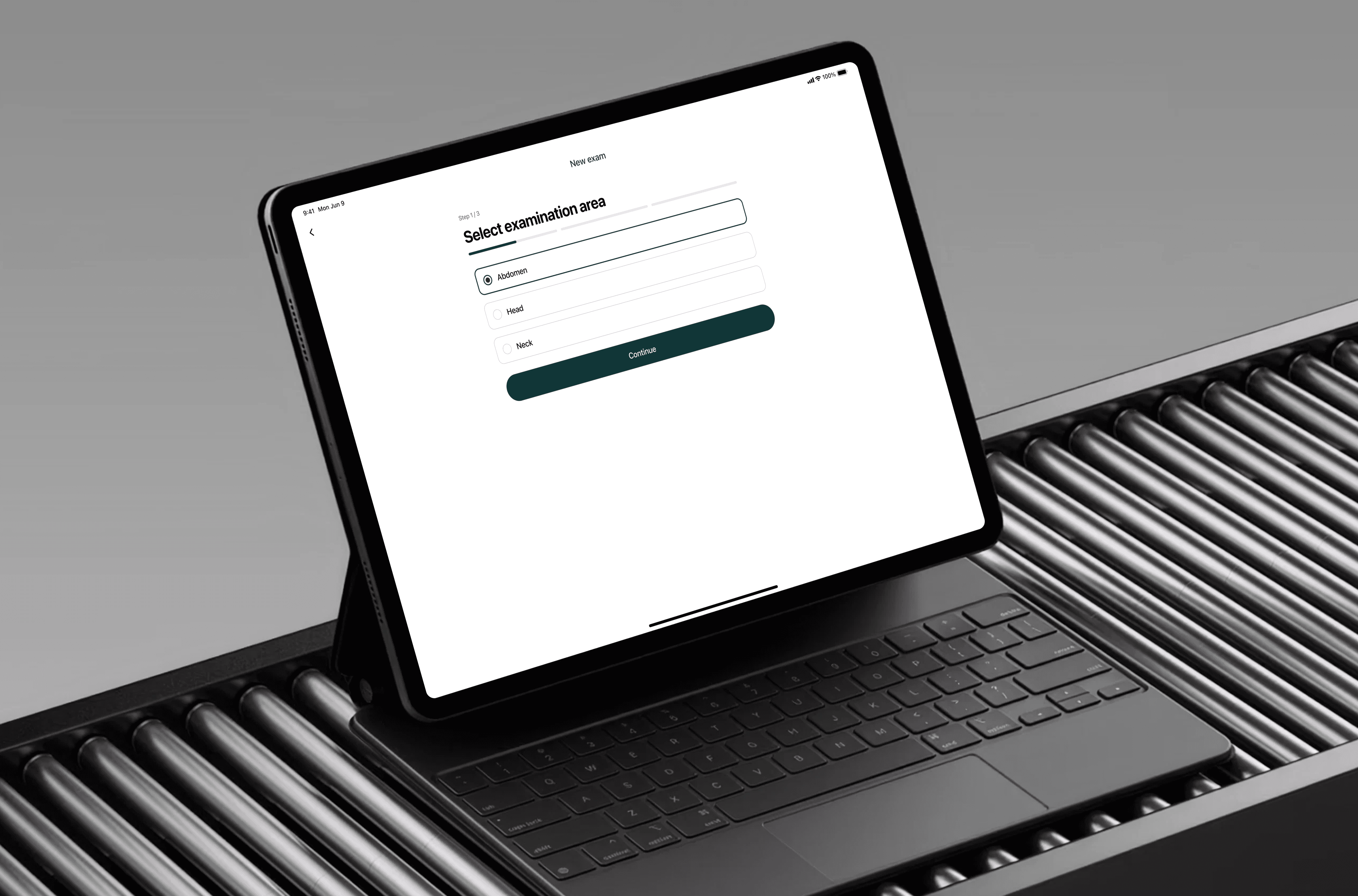
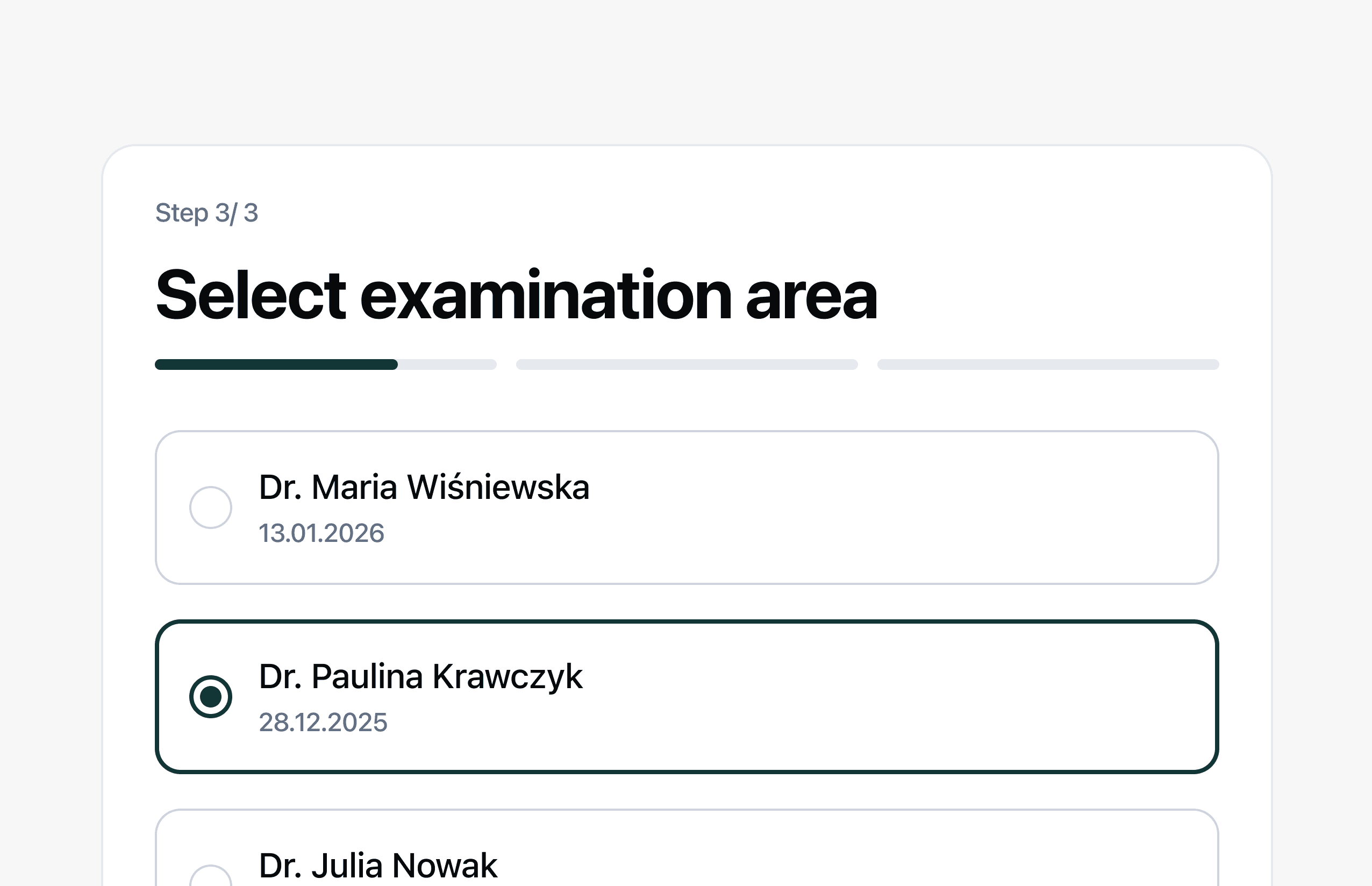
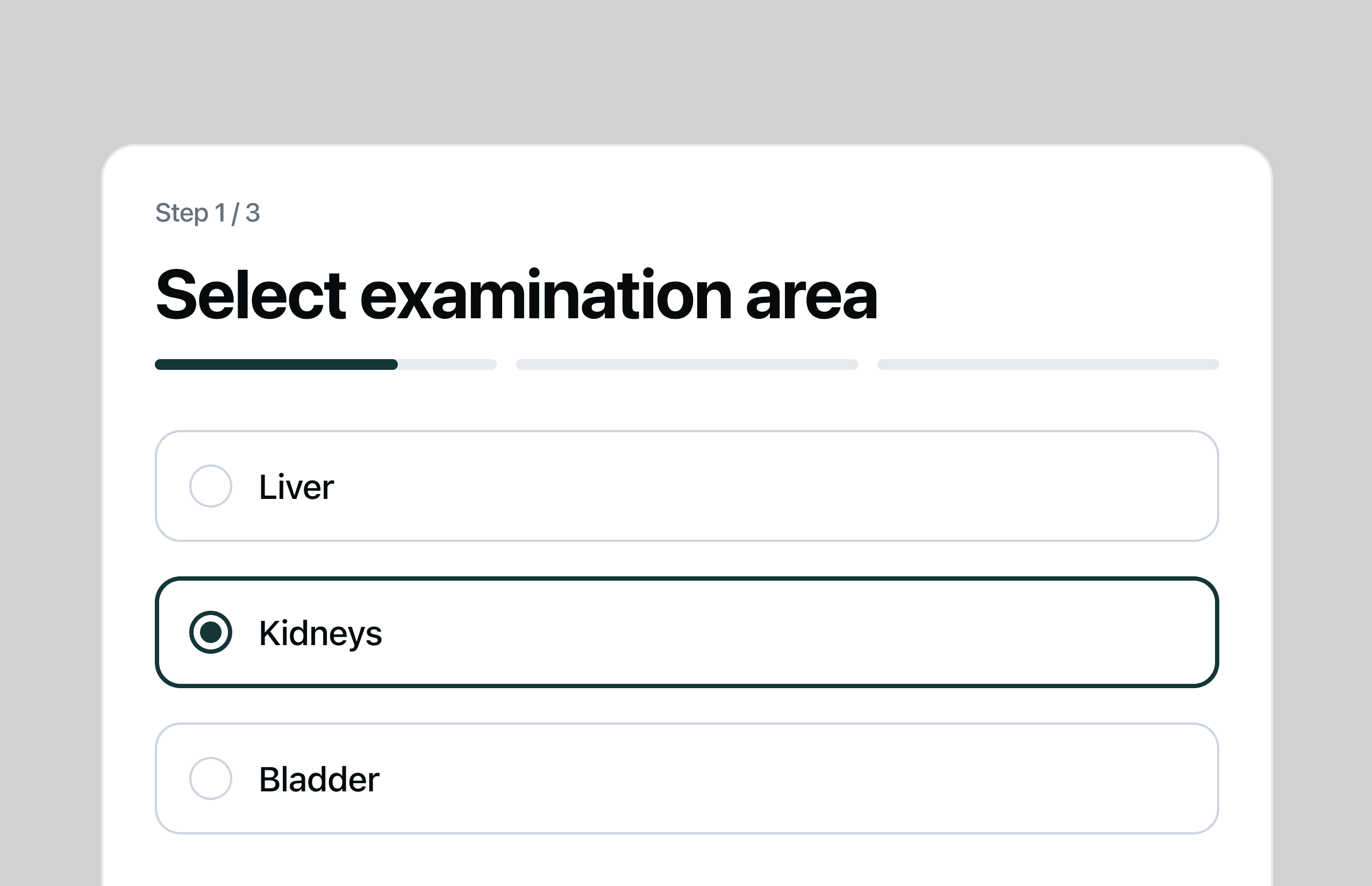
A guided pre-configuration step where doctors select the examination type, organ, and specialist, setting the context for structured data entry.
{/}
A dedicated examination screen where doctors can input measurements, review previous results, and compare data with previous results.
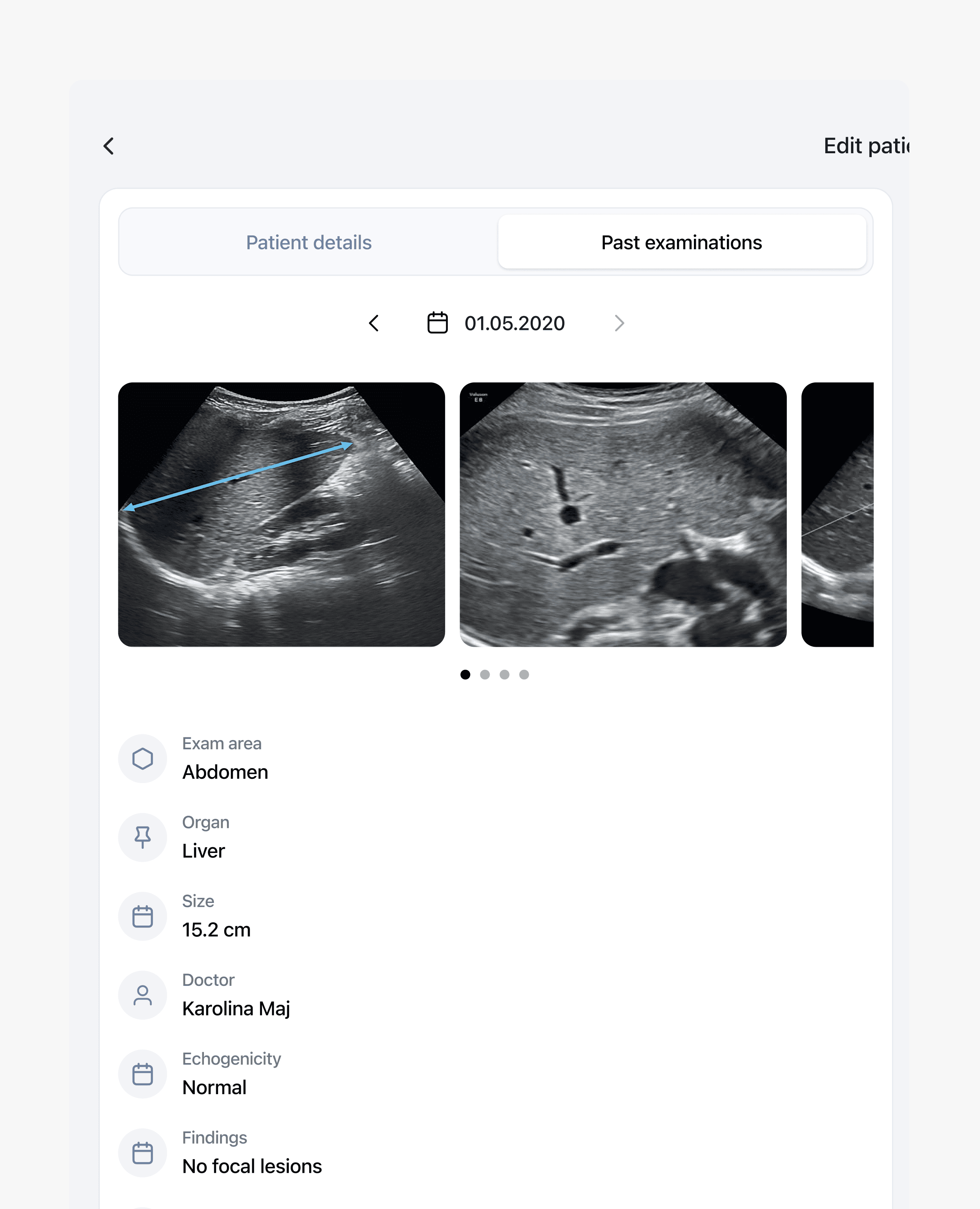
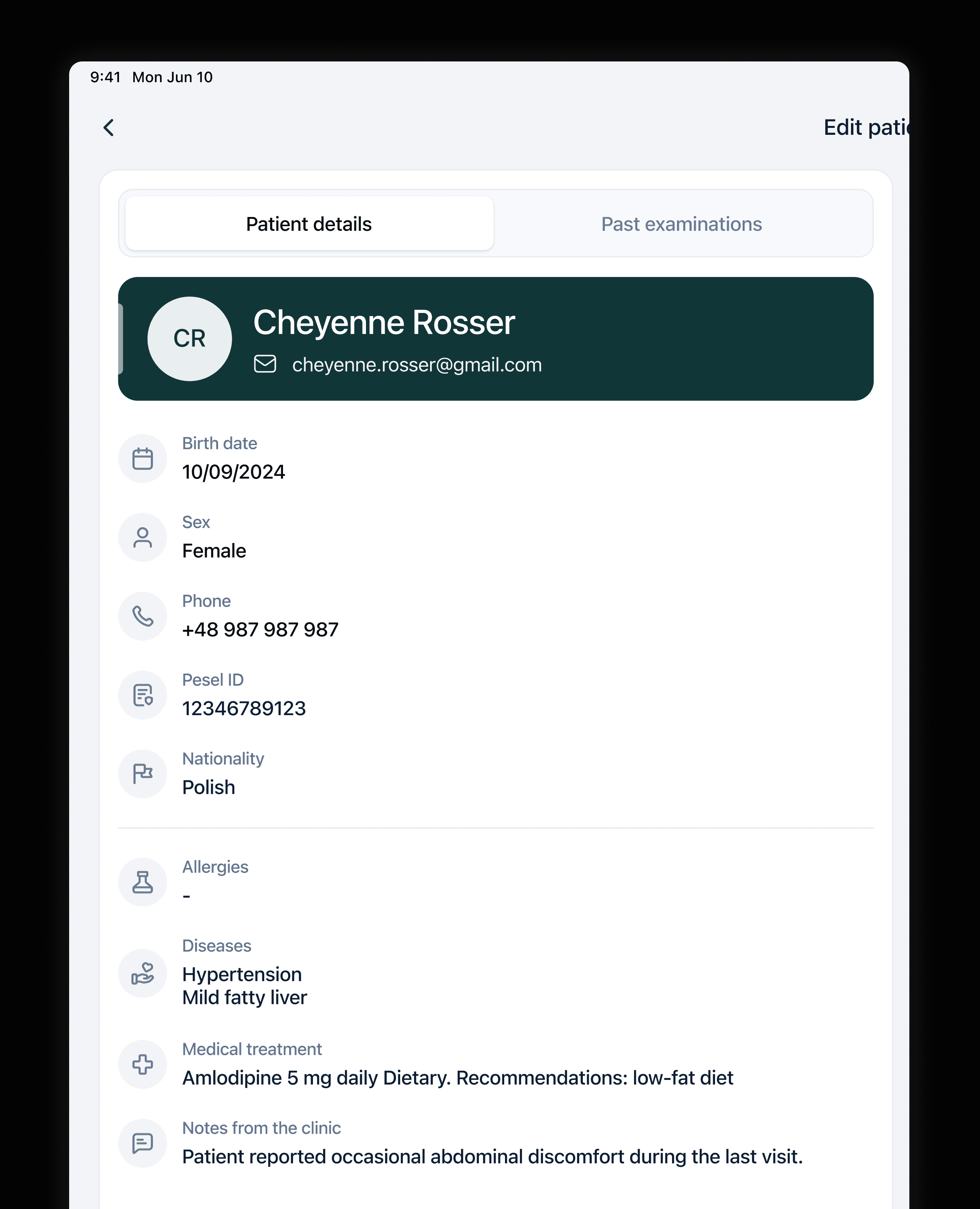
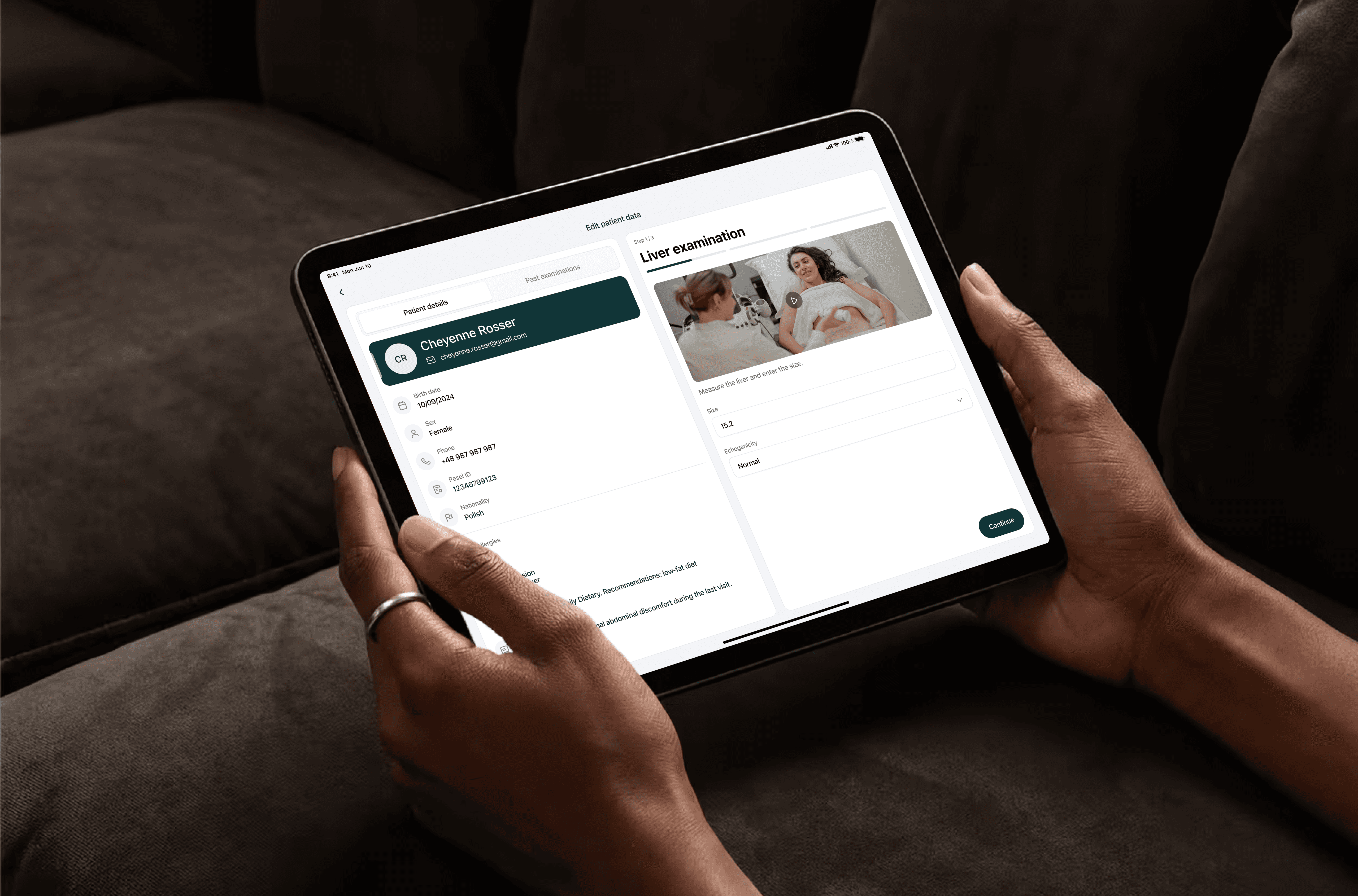
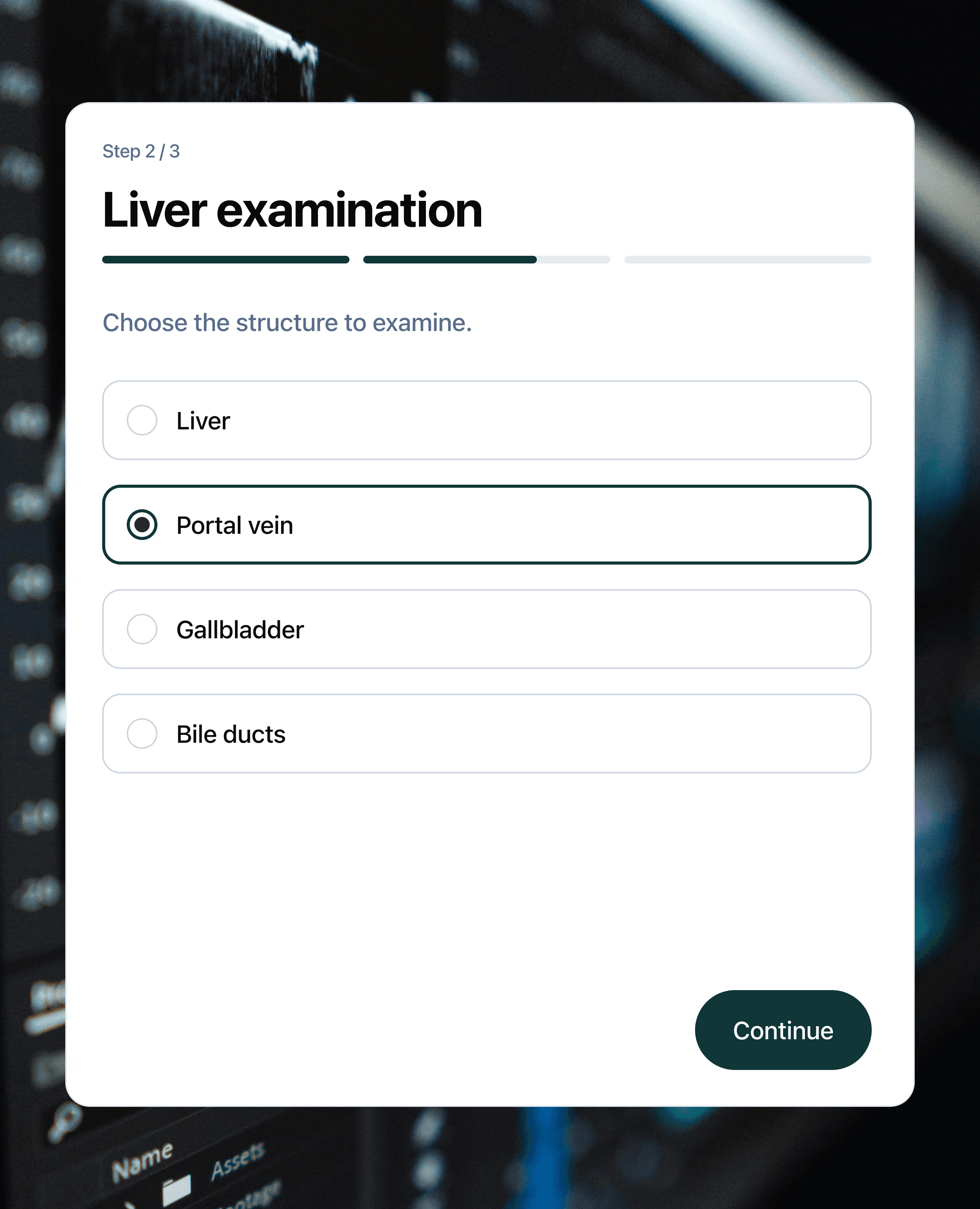
{/}

(01)
Faster ultrasound data entry. Reduced time needed to complete documentation compared to CRM-only workflows
(02)
Reduced cognitive load during examinations. Simplified structure and guided inputs allow doctors to stay focused on patients
(03)
More structured and consistent CRM data. Standardized input improves data quality and reduces errors